
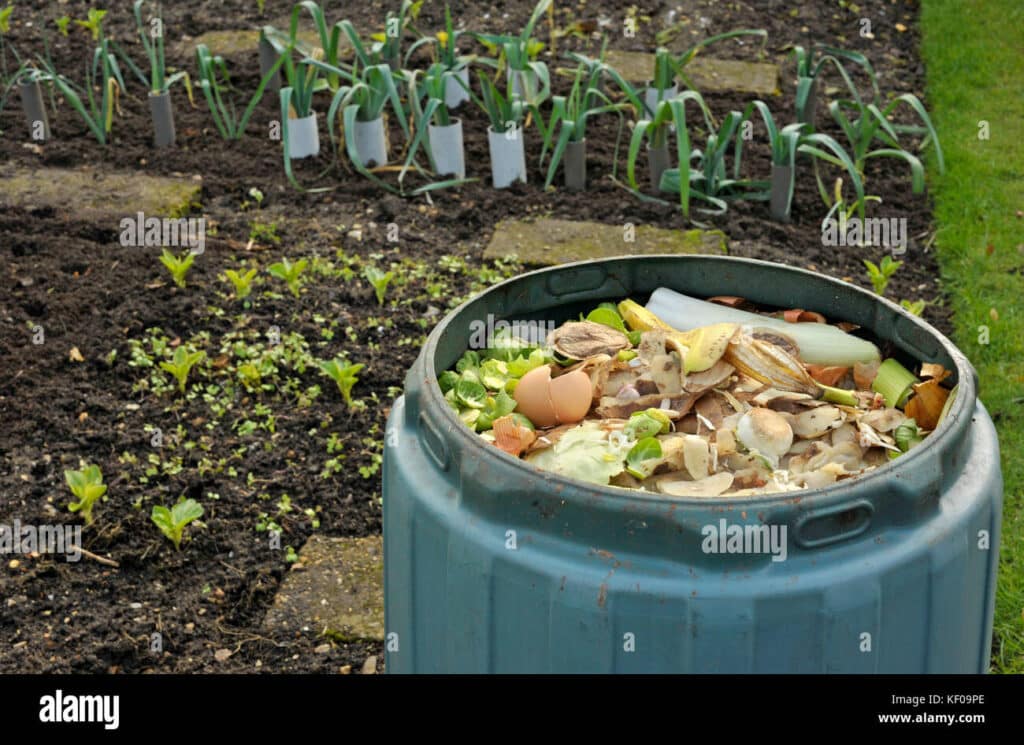
Composting is a natural process that has been practiced for centuries, but it has gained renewed attention in recent years due to its numerous environmental benefits. Composting involves the decomposition of organic waste materials, such as food scraps and yard trimmings, into nutrient-rich soil. This natural process not only reduces the amount of waste that ends up in landfills, but it also helps to mitigate climate change and improve soil health.
In this blog post, we will explore the environmental benefits of composting in more detail. We will discuss how composting helps to reduce greenhouse gas emissions, as the anaerobic breakdown of organic waste in landfills produces methane, a potent greenhouse gas. Composting also helps to divert waste from landfills, which reduces the need for new landfill construction and minimizes the release of harmful leachate into groundwater.
Reduces landfill waste and methane emissions
Composting is a simple and effective way to reduce landfill waste and minimize methane emissions. When organic waste such as food scraps, yard trimmings, and paper products are sent to landfills, they break down anaerobically, producing methane gas. Methane is a potent greenhouse gas that contributes to climate change.
By composting these organic materials instead, we can divert them from landfills and promote the decomposition process in an aerobic environment. This allows natural microorganisms to break down the organic matter, resulting in the production of nutrient-rich compost.
Composting helps to significantly reduce the amount of waste that ends up in landfills, which not only saves valuable landfill space but also reduces the release of methane into the atmosphere. Methane has a much higher global warming potential than carbon dioxide, so by composting, we can mitigate the negative impact of methane emissions on our environment.
In summary, composting:
- Reduces landfill waste
- Minimizes methane emissions
- Preserves landfill space
- Helps mitigate climate change
By actively participating in composting, individuals, communities, and businesses can play a crucial role in protecting the environment and promoting a more sustainable future.
Enhances soil quality and fertility
Composting is a natural process that transforms organic waste into nutrient-rich compost. One of the major benefits of composting is that it enhances soil quality and fertility.
1. Adds organic matter
Compost is rich in organic matter, which serves as a valuable food source for microorganisms in the soil. These microorganisms break down the organic matter, releasing essential nutrients that plants need to thrive.
2. Improves soil structure
The organic matter in compost helps to improve soil structure by binding soil particles together. This creates larger pore spaces in the soil, allowing for better water infiltration and drainage. Improved soil structure also promotes root growth and helps prevent soil erosion.
3. Increases water retention
Compost has the ability to retain moisture in the soil, reducing the need for irrigation. The organic matter in compost acts like a sponge, holding onto water and releasing it slowly to plant roots. This is especially beneficial in dry climates or during periods of drought.
4. Enhances nutrient availability
The nutrients present in compost are released slowly over time, providing a steady supply of nutrients to plants. This helps to prevent nutrient leaching and ensures that plants have access to the nutrients they need for healthy growth.
5. Reduces the need for synthetic fertilizers
By improving soil fertility, composting reduces the reliance on synthetic fertilizers. Synthetic fertilizers can be harmful to the environment when they leach into waterways or contribute to greenhouse gas emissions during production. Composting offers a natural and sustainable alternative for nourishing plants.
6. Supports beneficial soil organisms
Compost is teeming with beneficial microorganisms, such as bacteria, fungi, and earthworms. These organisms play a vital role in breaking down organic matter, cycling nutrients, and improving soil health. By adding compost to your soil, you create a favorable environment for these organisms to thrive.
In conclusion, composting is a simple and effective way to enhance soil quality and fertility. By adding organic matter to the soil, composting improves soil structure, increases water retention, enhances nutrient availability, reduces the need for synthetic fertilizers, and supports beneficial soil organisms. Incorporating composting into our daily lives can have significant environmental benefits and contribute to a more sustainable future.
Decreases the need for chemical fertilizers
Composting is a natural process that breaks down organic waste into nutrient-rich compost. One of the most significant environmental benefits of composting is that it decreases the need for chemical fertilizers.
Chemical fertilizers are typically made from non-renewable resources and have a negative impact on the environment. They contribute to water pollution and greenhouse gas emissions during their production and use. Additionally, these fertilizers often contain high levels of nitrogen, phosphorous, and potassium, which can lead to nutrient imbalances in the soil.
By composting and using the resulting compost as a natural fertilizer, gardeners and farmers can reduce their reliance on chemical fertilizers. Compost provides a balanced mix of essential nutrients, including nitrogen, phosphorous, and potassium, as well as micronutrients that are necessary for healthy plant growth.
In addition to reducing the need for chemical fertilizers, composting also helps to improve soil structure and water retention. Compost acts as a natural soil conditioner, enhancing its ability to hold water and nutrients. This, in turn, reduces the need for irrigation and helps to conserve water.
Furthermore, composting helps to sequester carbon dioxide from the atmosphere. When organic waste decomposes in landfills, it produces methane, a potent greenhouse gas. By diverting organic waste to composting facilities, methane emissions can be significantly reduced. Compost itself is a stable form of carbon, and when added to the soil, it helps to store carbon and mitigate climate change.
Overall, composting is a sustainable practice that offers numerous environmental benefits. By decreasing the need for chemical fertilizers, improving soil health, conserving water, and reducing greenhouse gas emissions, composting plays a vital role in promoting a greener and more sustainable future.
Promotes healthy plant growth
Composting is a natural process that promotes healthy plant growth by providing essential nutrients to the soil. When organic waste, such as food scraps and yard clippings, is composted, it breaks down into nutrient-rich humus. This humus can be added to garden beds, flower pots, or lawns, enriching the soil with important nutrients like nitrogen, phosphorus, and potassium.
These nutrients are vital for plant growth and development. Nitrogen, for example, is necessary for the production of chlorophyll, which is responsible for photosynthesis and helps plants convert sunlight into energy. Phosphorus aids in root development and overall plant growth, while potassium contributes to disease resistance and stress tolerance.
By incorporating compost into the soil, gardeners can improve soil structure and fertility, leading to healthier and more productive plants. This process also helps retain moisture in the soil, reducing the need for frequent watering and conserving water resources.
Overall, composting promotes healthy plant growth by providing essential nutrients, improving soil structure, and conserving water. It is an environmentally friendly practice that has numerous benefits for both plants and the planet.
Conserves water by improving soil’s moisture retention
Composting is a natural process that has numerous environmental benefits. One of the key advantages is its ability to conserve water by improving soil’s moisture retention.
When organic waste such as food scraps, yard trimmings, and leaves are composted, they break down and become nutrient-rich humus. This humus acts as a sponge, absorbing and retaining water in the soil.
By adding compost to gardens, lawns, and agricultural fields, the soil’s water-holding capacity is greatly enhanced. This means that plants can access water more efficiently, reducing the need for irrigation and saving a significant amount of water.
Furthermore, compost-rich soil has better drainage properties, preventing water runoff and erosion. This is especially important in areas prone to heavy rainfall or flooding, as it helps to prevent nutrient loss and pollution of nearby water bodies.
In summary, composting is an effective way to conserve water by improving soil’s moisture retention. By incorporating compost into our gardens and agricultural practices, we can reduce water usage, enhance plant growth, and protect our water resources.
Reduces the use of pesticides
Composting is not only a great way to recycle organic waste, but it also has numerous environmental benefits. One of the major advantages of composting is that it helps reduce the use of pesticides in gardening and agriculture.
When organic waste is composted, it is broken down by microorganisms such as bacteria and fungi. These microorganisms help break down the waste into nutrient-rich compost. By adding this compost to the soil, it improves its fertility and structure.
With healthy and fertile soil, plants become more resistant to pests and diseases. The nutrients in the compost provide plants with the necessary strength to fight off pests naturally, reducing the need for chemical pesticides.
Chemical pesticides are often harmful to the environment and can have negative effects on human health. They can contaminate soil, water, and air, leading to the destruction of ecosystems and harming beneficial insects, birds, and animals.
By composting and using compost as a natural fertilizer, we can create a sustainable and eco-friendly gardening and farming practice. It not only reduces the use of harmful pesticides but also promotes healthy soil and biodiversity.
Helps mitigate climate change impacts
Composting is a simple yet powerful way to help mitigate the impacts of climate change. By diverting organic waste from landfills and incinerators, composting reduces the production of harmful greenhouse gases, such as methane and carbon dioxide.
When organic waste decomposes in landfills, it lacks the necessary oxygen for aerobic decomposition. As a result, it produces methane, a potent greenhouse gas that is about 25 times more potent than carbon dioxide in terms of its global warming potential. Composting, on the other hand, provides the ideal conditions for aerobic decomposition, allowing organic waste to break down into nutrient-rich compost without producing significant amounts of methane.
In addition to preventing methane emissions, composting also helps to sequester carbon. When organic waste is composted, the carbon it contains is stored in the resulting compost. This helps to reduce the amount of carbon dioxide in the atmosphere, as carbon dioxide is a major contributor to climate change.
Reduces the need for synthetic fertilizers
Compost is a natural and nutrient-rich fertilizer that can replace or supplement the use of synthetic fertilizers. By using compost instead of synthetic fertilizers, we can reduce our reliance on fossil fuel-based products and their associated environmental impacts.
Synthetic fertilizers are typically made from non-renewable resources, such as petroleum or natural gas. The production and use of these fertilizers contribute to greenhouse gas emissions, air and water pollution, and soil degradation. Compost, on the other hand, is made from organic materials such as food scraps, yard waste, and leaves, which would otherwise end up in landfills. By using compost as a fertilizer, we can close the loop and return nutrients back to the soil in a natural and sustainable way.
Improves soil health and fertility
Composting is not only beneficial for the environment but also for soil health and fertility. When compost is added to soil, it improves its structure, moisture retention, and nutrient content.
Compost acts as a natural soil conditioner, improving the soil’s ability to hold water and preventing erosion. It also provides a slow-release source of nutrients, such as nitrogen, phosphorus, and potassium, which are essential for plant growth. These nutrients are released gradually as the organic matter in the compost breaks down, providing a steady supply of nutrients to plants and reducing the risk of nutrient runoff and pollution.
Furthermore, compost enhances the biological activity in the soil, supporting the growth of beneficial microorganisms that contribute to soil health. These microorganisms help to break down organic matter, improve nutrient availability, and suppress plant diseases.
Reduces waste and landfill space
Composting is an effective way to reduce the amount of waste that ends up in landfills. Organic waste, such as food scraps and yard trimmings, makes up a significant portion of our waste stream. By composting these materials, we can divert them from landfills, where they would produce methane and contribute to the greenhouse effect.
Diverting organic waste from landfills also helps to reduce the strain on landfill space. Landfills are finite resources, and as they fill up, finding new sites for disposal becomes increasingly challenging and expensive. Composting allows us to make the most of our waste by turning it into a valuable resource instead of burying it in the ground.
In conclusion, composting offers numerous environmental benefits. It helps to mitigate climate change impacts by reducing greenhouse gas emissions and sequestering carbon. It reduces the need for synthetic fertilizers, improving soil health and fertility. Additionally, it reduces waste and conserves landfill space. By composting our organic waste, we can make a positive impact on the environment and move towards a more sustainable future.
Frequently Asked Questions
1. What is composting?
Composting is the process of decomposing organic materials into nutrient-rich soil.
2. What can I compost?
You can compost fruit and vegetable scraps, coffee grounds, yard waste, and more.
3. How long does it take for compost to be ready?
Compost can take anywhere from a few weeks to several months to be ready for use.
4. How does composting benefit the environment?
Composting reduces waste, enriches soil, and helps reduce greenhouse gas emissions.

